Welcome to our website !

Jaipur Mera Shehar

Re-imagining Jaipur

Learning city unConference - a look back


This post was originally made on JaipurCityPost


Twelfth of March 2016 was like any other spring Saturday, with the sun shining down the front lawns, some running for work and some basking in the laziness of the dawn of another weekend. Little did many knew, that beyond the threshold of a school in Jaipur, a little pulse of revolution was throbbing. Jaipur City Learning unConference, organized within the mesh windows and yellow walls of Samarth School, in association withPravah (Jaipur) and Shikshantar, was an alternate Conference bringing people of all ages to learn, teach, co-create together with other like minded people. It was a place to meet local learning communities who brought their work, skills, processes, projects, produce, books, gifts, ideas and conversations that is and can further transform our city Jaipur.
There are some people that go with the defined flow of life, following the herd, meddling in with the stereotypes and making their life a dance routine and then there are some who come out of the trance of survival on earth and actually look around their worlds to find the deepest meaning of their lives. The unConference was nothing but an amalgamation of such people, who wanted nothing, but to break the shackles of following the society imposed conventions and live a life that, their uniqueness defined for them.
At first sight, it was overwhelming to know where to be or where not in the bunch of almost all strange faces, but thanks to the organizers, who began the event with fun activities.With participation open to all, the fun activities consisted of co-operative games and soon the ice began to break and the strange faces started melting and reforming as acquaintances.


The entire premise of the school was divided in activity zones. The rooms was slotted for variety of workshops and sessions – like Urban farming at zero budget, restorative justice, story telling, circle dance, bottle art, alternative education, social entrepreneurship. The programs like You Lead talks, Elder Earth Project, consisted of story-telling and sharing one’s life experience and lessons with an overall view of making Jaipur a learning City.
The school’s balconies and rooftop were adorned with colorful stalls. All the stalls were an end result of innovation and creativity. One could find various sorts of art and craft items ranging from dream catchers to paper earrings, homemade food items such as chocolates, brownies, muffins etc. and stalls representing various initiatives such as that of myschoolproject.com showcasing and promoting the concept of importance of practical learning in schools.
One of the things that highlighted the essence of the event was the “Dariya Dil ki Dukan”, where one could buy anything present in the stall with smile being the currency for the means of exchange. Amidst all the hustle and bustle of the workshops, the open verandahs were a beautiful mixture of people indulging themselves in various art forms. There was painting, singing, pottery making and dance circle. In all the alternate corners, one could find food stalls, feeding the organizers, the volunteers and the visitors with fresh juice, snacks and food according to the need of time. A room was dedicated to DIY Film festivals showing short movies throughout the day. In the end, groups were formed and initiatives were taken by people working in different domains to step forward and plan to create a change in the domain where they would like to see one.


Some people came with a purpose, some with a message, some to find a way, some to experience new things and some simply to enjoy. Whatever be the intention, the unConference proved itself to be satisfying everyone’s expectation in some way or the other.

As much as one would like to break down the event in the form of facts and architecture, the truth is that the actual beauty was not in organization or management or the decoration but simply the quality of people present. Everyone has a story behind them and this was the place where all were appreciated without any preconceived notions of what the society defined for us. There were new friends made, heartfelt exchange of life stories, experiences and lessons. Some shed tears, some stammered in opening up and some just kept smiling all the way through but if there’s one thing that surely happened was that everyone at one point in time on that day would have felt a certain joy of being in a place where the notion of “fitting in” ceased to exist.

Imbibing Love for Nature in Urban settings


Nature has it's OWN WAYS...


-Ever wondered how our ecological systems are managed? 
-Have you thought how important our Holy Cows are? 

Lets hear out Deepti's views on on natural cycle of our Mother Earth.


 " Our widespread and long term use of pesticides and chemical fertilizers is creating large scale barren soils.
Having studied botany from Raj University and Civil Engineering from Columbia University I was aware that the natural cycles of the earth- the carbon cycle and the water cycle are malfunctioning  on a global level. 
After much study and understanding I have come to the conclusion that the  the only reasonably cost effective and relatively quick way to restore the health of soil  on a larger scale is to keep the cows on the land. Much the way Krishna kept them.

Our Holy Scriptures talk about Krishna having  9 Lakh cows and Radha's father having 12 Lakh.
And what I would like people to know is that they did not keep cows for just their milk.
Their was a much bigger, more important reason.
They were using the cows to manage their ecology. The cows went grazing everyday to a different piece of forest land and every place these cows moved from, they left behind their mutra(urine) and gobar (cow dung) in huge quantities. What grass they could not eat was trampled and pressed into the soil as mulch. These 2 acts by the cows had an enormous effect on maintaining the quality of the soil.


In the cow dung and urine left behind by the cows, were millions of micro organisms from the cow's rumen, which then fed the insects, the birds and the other small animals around. All the droppings from the cows, birds and other wild animals acted as a manure and fed the grasses, shrubs and trees that helped to create a healthier forest. All the vegetation led to an increase in the carbon in the soil as well as in forests and grasslands the soil supported. All this carbon came from the Carbon Dioxide in the  atmosphere.

Without the thick vegetation and the rich soil bank the carbon has ended up now in our atmosphere. 
And the what remains is desertifying soils and rising carbon dioxide levels. This is the carbon in the air (in the form of carbon dioxide) that is causing climate upheaval.
Hence the carbon cycle is disrupted.


Now more the carbon in the soil ie. rich healthy soil acts as a sponge and collects and stores the water that falls on it as rain and later releases this water through out the year, even long after the monsoons are over. This process allows our streams and rivers flow perennially. Because of such life nurturing contribution by the cows, they are venerated in our culture.


For me the link is clear.

Cows mean clean water,
Cows mean clean and healthy food,
Cows mean stable climate,
Cows mean clean air,
Cows mean forests and ecologically healthy ecosystems,
Cows mean healthy soils,

And in the end Cows can mean delicious milk, ghee, chaach etc". 


A mother is her child's first love..


A simple thought can bring about a big change.
Meet Gurpreet Kaur and her daughter Ayana who believe that their passion is what will get them going..


Belong to a small town in UP , Moved around India for my own education and with great ambition completed my MBA to join a MNC where I worked for 7 long years and would have been still there if the issues in education hadn't touched me deeply. It all started after I started to look for schools for my daughter and didn't want her to be in a factory kind of school. I believe education is much more than literacy but each school i went to showed me only a list of topics in form of syllabus that child would know by the end of it. Almost at the same time during my landmark education advance course i came across a lady whose son was going to a Waldorf school and that was it. That was the first time i heard of Waldorf. I explored it through visiting various Waldorf schools and going for residential training and thereafter opened the school in Jaipur along with the mentor from a Waldorf School and now I m working for it on my own. Its being a tough journey but  i am sure that passion for it would get me going.

The school is based in civil lines, Jaipur and there are 4 children in the school including my own daughter.

What I want to talk about:---

How Waldorf Instills a lifelong love for learning in children?

Waldorf, though 100 years old time tested pedagogy, still is very new to India and hardly anyone knew of it in Jaipur. I would want to cover a brief introduction of Waldorf schooling system for kindergarten and how its so appropriate, especially for times today. 


Making our own path....


Swaraj University


What if you walk into a university to find out that there are no classrooms, teachers, degrees, curriculum, and exams? Above all, you even see people learning joyfully in their own ways, involving their head-heart-hands, doing in their lives what interests them the most. Welcome to this place of learning and unlearning called Swaraj University, which for last 6 years has been providing platform for youth to identify their hearts’ vision and engage them in developing the skills and practices they need to manifest that vision.

Unfortunately, due to pressures of society, family, media, and education system, youth today are devoid of acceptance at every level. In the tender age of 15-27, a lot changes in the life of a youth which they need to cater to – there are struggles with parents on career & livelihood; that is when they begin tryst with relationships and love; there are a lot of bodily changes, one also begins to question their role in the society, or find purpose of life. Unfortunately, our education system pays little attention on all these aspects of life. The only focus is on career and livelihood.


At Swaraj University, we support khojis (that's what learners call themselves) to start, create and reclaim self-designed learning processes, provide a safe space to the learners to walk their path with other co-travelers and take responsibility of their emotional well-being, engage them with many unlearning challenges to help them out of their comfort zones and build deeper perspectives for regenerating self, soil and society. We also connect them with a wide network of individuals and organizations that provide internship, mentoring and work opportunities, support them to discover, articulate and work towards shifts that our world needs today and give the opportunity to translate dreams and passions into real and sustainable livelihood possibilities.


A few khojis and team members of Swaraj University would be present at the 

Jaipur Learning City unConference and would be glad to share their experiences.


Looking forward to see you at this exciting event...


 To know more about the University click here and to know more about what some of our khojis are upto Explore here


Eco Haat Trio

Glimpse of Eco Haat


The three pillars of Eco Haat


Guddi Prajapat: Born in Mewar, Rajasthan and is the co-founder of ‘ECO Haat’. She is a motherly figure and is an affectionate woman. She cares for each and everyone. Keeping our rich culture alive, Guddi likes to sing the traditional songs and has a vast collection of them.
She is also fond of creating the herbal products and likes holding workshops at different places to spread awareness about the benefits and the use of herbal products to  people. 
She is a remarkably hardworking woman who has worked day and night to create a forum like Eco Haat where the best of herbal products are easily available for everyone.  

29842_127480060601986_3951221_n


WishAll Singh: Ever since the childhood, Vishal had a creative instinct him in and what appealed him was the waste material. That's where his journey began as a crazy designer and he became the master of - Best out of Waste. He experimented with the waste product and created some out of the box designs and products. Beside being the co-founder of Eco Haat, Vishal also loves trekking, organizing heritage walks and community mobilizing oasis games. He has been working on making his home city Udaipur, a zero waste city. For him, Tinka was another venture for taking a step closer to his dream.


happy borth


Ritesh: She is the third pillar of the Eco Haat group who brings the balance by being the sanest in the group. After studying accounts, she realized that her real passion was to create things with her own hands. One can learn the art of smiling from her. She has a positive aura around her, her level of patience can surprise anyone. The serene look on her face is what comforts the people around her. 


1025417_539572796107176_1015697210_o


The three of them together will be a part of the Jaipur Learning City unConference on 12th march 2016 and bring to you the best methodology of making eco-friendly colours.


Live Live CRAZY Style...

Every family has that one member who is crazy and drives people crazy with his energy and enthusiasm . Here is another high-spirited  member of the unConference member who believes that- live each day as if it was you last and love each one around because all humans are beautiful in their own way.


                                                                       Manish Kataria


Here is a small message from our crazy Manish-

Hello Friend,
So excited to be part of Unconference  happening in Jaipur. I have been to some Unconferences before and it's an unforgettable experience. Specially, for me I found so many 'crazy' people like me, connected with some as families and have formed very deep bonds with some of them, which is so beautiful. It's not only a day long event, it's beginning of new life and fun. For me, it's life changing initiative which encourage me to do more beautiful things in the world. 

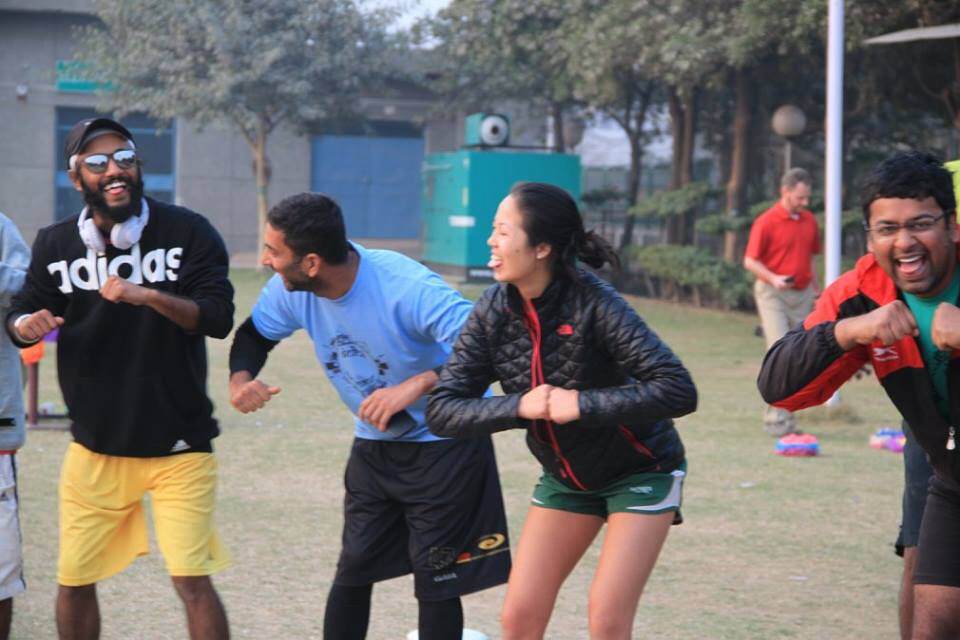
I really want to offer my co-operative, non-competitive games, energisers and dances. Also want to put lots of positive energy to help us all go crazy and to put lots of fun, laughter and smile in the gathering. 

Also, want to share my journey to introduce a new sport "Ultimate Frisbee" in Rajasthan and  "Harawal" cycle initiative.


Here's a glimpse of the crazy experience that you will encounter on 12th in Jaipur. 


one is ALONE but together we are a TEAM...

Aditya and Chintan are taking a session on social entrepreneurship during the unConference. 


             Chintan Bakshi                                                             Aditya Nath


Social entrepreneurs solve social problems through the for-profit route. A number of times social entrepreneurs start as a non-profit project and then figure out a sustainable business model. Social enterprises can be built to solve problems in areas like education, health, environment, waste management etc to name a few. Social enterprises need to start with an innovation (that solves a problem) around which a business model could be built. Some social enterprises retain a hybrid character – one part of the social enterprise function always remains as a non-profit while another part becomes a for-profit. For example, activities like awareness generation to create demand for a product, might need a lot of effort before results start and thus these can be sustained only through grant contributions, but once the demand gets generated, the for-profit model kicks in. For example, generating demand for an alternative model of education in rural India might take a lot of effort and time, but once the demand generation has been done, the process of providing education could be enabled through a for profit model.

Some social enterprises can be built around a common non-profit activity of community mobilisation. Say, the community in a village has been mobilised to work together and create a governance structure which has the capability to execute village level projects. Multiple social enterprises in areas like water harvesting, waste management, rural electrification etc can now get enabled to work in the village and provide products and services. Collectives also make possible the delivery of multiple services and revenue collection for B2C services and can further lead to development of new business models. Similarly, collectives developed through mobilising the residents of an urban cluster can provide the necessary demand for a lot of innovative social ventures in areas as diverse as urban farming, community centre management, sports, arts, waste management, water harvesting, to name a few.   


Social enterprise development essentially requires the following steps and processes:

1.       Identifying the social problem
2.       Understanding the problem in detail and empathising with the person facing the problem to                 understand the context of the problem
3.       Brainstorming on all the possible solutions
4.       Shortlisting the top solutions
5.       Creating the prototype or the minimum viable product (MVP)
6.       Designing the pilot testing project to test the MVP
7.       Raising resources for the pilot (ideally it should not need any external resources)
8.       Implementing the pilot project
9.       Collating results and key learnings
10.    Developing the scalable business model
11.    Implementing the scalable business model


Startup Oasis is looking to work with aspiring social enterprises and multiple social enterprises and help them with developing the right MVPs / business models and by providing them networks in rural and urban areas and advisory support.  

World beyond HIStory...and tales beyond Bed time story...

Storytelling session.....


Name: Koitso Salil Mukhia

Project: Elder Earth Project (is a compelling journey in storytelling with an attempt to record voices of the last shamans of critically endangered tribes and sounds of the sacred elder natural sites)


About Koitso: 


Of the Koits tribal community of the Eastern Himalayas, Koitso is one of the very widely acknowledged storytellers in the country.  A shamanic healer by tradition, his work revolves around the idea of bringing forward the relevance of nature based sacred  traditions in the urban context.  Founder of Acoustic Traditional and National Festival of Indigenous Storytellers,  his work over the past 14 years has been driven towards reviving indigenous oral traditions and documenting the vanishing folklore of various tribes of India.


Session for the un- conference:

1. Fire Storytelling Circle
Time: 11 to 12.30 
6 to 7:30pm
This transformative session invites all into the sacred circle of sounds and stories for the Earth and her Spirit Guardians. 
With mountain music, sacred sounds and drums the session is an exploration into the incredible world of sky stories and legends of the ancient worlds.

Life has its own beautiful ways...

DARIYA DIL DUKAAN……….Aamod ki Jubaan…


Aamod Kumar Karmaksh is a 22years old young and promising individual pursuing Bachelors in Architecture from Malaviya National Institute of Technology, Jaipur. He was born and brought in Nalanda district, Bihar. Struggling with the fast pace of life after shifting from a small town to a big city brought turbulence to his simple lifestyle. He felt pressurized by the stiff competition, fight for high scores and ranks, students politics etc.

Much disturbed by this horrific experience he came across the “minimalistic approach” to life which appealed to him and he began to explore it more. As he began his research on the same, he met certain people, got more familiar with the concept and finally joined the concept- “Dariya Dill Dukaan” started by Mr. Manish Jain in Shikshantar, Udaipur. Further  Deepa Piplani conducted this campaign at a Pan India Level.

CONCEPT: The main concept of this campaign is- the lesser you have, the happier you are. You can also say that the motive of this campaign is that if an individual has something in surplus and is not using it, he can share it with people who need it more than him. Thus, a minimalistic approach to life. For example, if someone has extra woollens which he/she does not need, he can pass it on to someone who needs it more.

Dariya Dil Dukaan provides a platform for people to adopt this approach and practise it in their day to day routine, it can be either a material good or any service which one wants to offer to the other.
Aamod was touched with the concept and wanted to lead this campaign with Mumal in Jaipur and popularize the same in the city as he felt that this is the only city that has still preserved a high level of heritage and provides a platform to welcome such concepts more willingly.

Now Aamod feels that he is gaining back the lost momentum of his life and feels great inner peace leading and living this concept himself personally. Through Unconference he has found a more concrete forum to reach out to a larger audience and share his leanings and experience after joining Dariya Dil Dukaan.

The spirit of Circular Dances


An offering from Rahul Hasija at the Jaipur unConference


Once upon a time, above the big brown land and under the big blue sky, there flew a tiny little spirit. She floated, floated, and floated in the air and possessed whomsoever she met on the chair.  The possessed did nothing but danced – danced with great joy and exhilaration, unaware and alarmed. It danced, day and night, left and right, and possessed everyone, meek and might, heavy and light.

We invite you to be possessed by ‘The spirit of Circular Dances' – an introductory workshop to experience dances in a totally different dimension. Dance is such a sacred act of connecting with self, others and the Earth, but the contemporary world marginalizes it to just a ‘performance’ and revere those who are ‘good dancers’. This workshop is aimed at challenging this notion and it brings together some of the folk circular dances from around the world and creates a space for everyone to experience the joy of dancing in a community. We would learn few of the folk circular dances and practice it so that you can take it forward and share it with others.

These dances are a great source of bringing together a group, team or a community and it is a great tool for those who are working with youth, children, families, or any group. This workshop is also for those who feel (and often say) ‘I don’t know how to dance’.


About the workshop Facilitator

Rahul Hasija has been exploring self-expression through mediums of writing, blogging, dancing, story-telling, theatre, and traveling for last 6years. Associated with Swaraj University as a facilitator for last 3 years, Rahul helps in creating a safe space for learners to share their personal stories, develop facilitation tools and hosts sessions on team-building, cooperative games, circular dances, reconnecting with the ancestral roots, rethinking-development and connecting with the nature. He has worked with quarterly magazine ‘Eternal Bhoomi’ as a sub-editor and layout artist. He is the translator and editor of two books – ‘Narmada – the river of joy’, and ‘The original forest’. And he has written several short stories mostly depicting childhood experiences and re-thinking development.

Visioning a harmonious and contented world, Rahul believes in simple, less-consumption oriented living and is also exploring community and sustainable living. He envisions spaces where stories, music and dances travel into our hearts, thereby nurturing and sustaining a more harmonious earth.
You can follow some of his expressions at http://thefreedomwalker.wordpress.com


UNSCHOOLING, GRATITUDE AND GIFT CULTURE...


This is the offering from our friends Sanjeevani, Shekhar and their kids Sidhanth and Raaya at the Unconference. If you want to understand Unschooling, Gratitude and Gift-culture deeply,
 this will be a great opportunity to start with.

Life learning : We are an unschooling family. The "unschooling" term relates to the part where our children have chosen to stay home and not go to a conventional school. We as parents are choosing to look at ourselves with new understanding of the conditioning that we have been accustomed to. Our journey has been to gently look at our conditional thinking. We are a family believing in 'Life Learning'. We as a family as well as individuals learn through daily experiences in our lives, interacting with our surroundings and lovely people we meet everyday. We believe that every person shines when honored, respected, celebrated,and loved for exactly who they are.
During the unconference, we wish to put up the books on unschooling that have been our guiding lights, a chart or two about peaceful and connection parenting & want to invite over people to share their experiences & learnings. Through discussions we look forward to exploring the beauty of life learning, peaceful connections and celebrate the journey.

GRATITUDE : As a family, we are exploring the feeling of 'Gratitude' for all the small & big things in our lives. Expressing gratitude is helping us focus on all the positives in our lives. Appreciation of 'what is' brings in more appreciation & more & more.... Combined with the 'Law of Attraction', it attracts more such things/ incidences. During the unconference, we wish to share our experiences with the audience at our stall. We wish to take away more strategies to adopt in our lives to express gratitude & appreciation for all the things in our lives which make it worthy in every which way.

GIFT CULTURE: This concept is still new in our lives. Our minds are deeply ingrained in cash exchange for goods & services. Having been introduced to the basic tenets of 'Gift Culture' we have been intrigued with lot of questions & queries in our minds. We explore this journey by exchanging 'Home Made Chocolates & Lemonade' for the gifts in any form. We would be offering  hand made chocolates & home made lemonade at our stall to all. In exchange, we would request them to offer us whatever they can - their skills, knowledge, books, goods, money etc.


  • To learn more about Parenting Resources online, please Click Here
  • Gratitude and Appreciation are also an important part of out life and to understand it deeply, Click Here


The Good Earth...

Here is the story of Ajit's journey who will be sharing about  Zero Budget Farming at the Jaipur Unconference on 12th March, 2016. 


"I completed my graduation from Pune University and got an opportunity to serve on a farm (450 acres) near Belgaum amidst a tropical evergreen forest of western ghats, there I developed my interests with land and cows, we had a task which people thought of impossible that is to grow your own food without any modern facilities of technology not even electricity. 

I took vegetable cultivation and cow care. The area receives annual rainfall of 5000 to7000 mm, which makes it difficult for the vegetables  to survive in the four month monsoon period. People there were skeptical about growing anything there, however we managed to grow 20 varieties of veggies in rainy season. It was a pleasant surprise for neighbours to  see that we harvested at least of 200 pumpkins(ripened), 200kgs of  4 varieties of cucumbers only, and all in a small patch of rain fed land. 

We cultivated all this with only pure pure organic inputs without any expenditure from external sources. When we had realised that our soil was deprived of fertility which is vital force for plants to grow,  we started to work on land by using cows to fertilise it and improve the carbon(organic matter) in soil. Then journey started for transforming or healing the E class soil to A class. 

Now on my own land at pandharpur in Maharashtra we cultivate sericulture with no till zero budget farming on 4 acres of land from  which we earn about 6 lac net annual income. 

Currently I am in Bassi, near Jaipur at Agrawal farm created by Deepti Agrawal and her team. Here I am part of the team which looks at  holistic management of cows and we work towards improving the soil fertility, conserving carbon and water to improve in every aspect of the soil, to restore mother earth to its natural form and we also do it in natural ways. 


I would enjoy sharing my learnings with the Jaipur Unconference friends so people in the city who are longing to grow some food in their home gardens or pots in the balconies can get some skills to do so. We will learn how to make compost from the kitchen waste and grow seasonal vegetables in our homes so we can nourish our families with wholesome and safe food.